
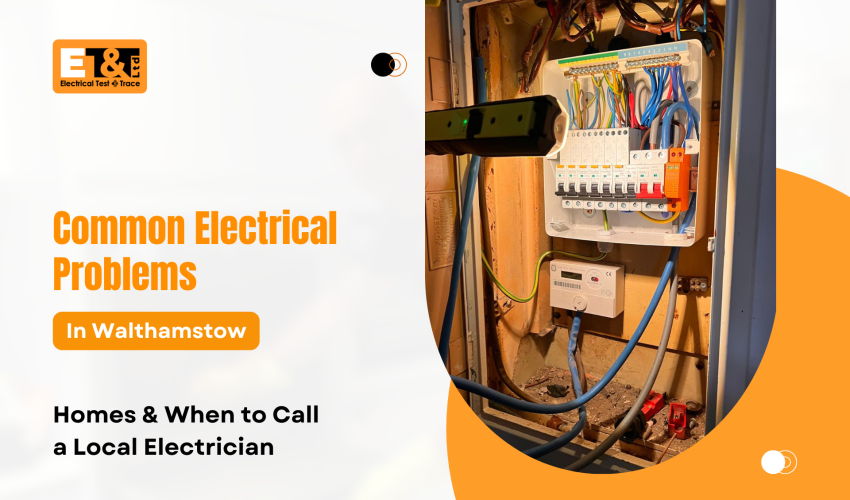
There is a lot to love about living in Walthamstow. From the historic charm of the Village to the bustling energy around the High Street and the beautiful, iconic Warner flats that define the area’s architecture, it is a brilliant pocket of East London. However, behind those stunning Victorian and Edwardian brick facades, there’s a hidden issue of ageing wiring and outdated electrical systems. So, it’s often necessary to consult a trusted electrician in walthamstow to meet modern safety standards.
The reality is that much of the housing stock in this borough was built decades (sometimes over a century) ago. While the brickwork might stand the test of time, the electrical wiring hidden behind the plasterboard does not. If you are noticing electrical problems in Walthamstow homes, brushing them off as just a “quirk” of an old house is a dangerous game to play.
We speak to local homeowners and landlords every single week who are experiencing frustrating power outages, weird buzzing noises, or tripping fuse boxes. Ignoring these warning signs is incredibly risky.
In this guide, we are going to walk you through the reality of running a modern lifestyle on an aging electrical grid, what to look out for, and exactly when you need to put down the DIY tools and pick up the phone to a certified professional.
The Clash Between Historic Homes and Modern Tech
To truly understand why common electrical issues in Walthamstow are so prevalent, we have to look at how our daily lives have changed compared to when these houses were originally wired.
If you step back to the 1950s or 1960s, the average household electrical load was incredibly light. You had a few incandescent lightbulbs, a radio, perhaps a television, and a refrigerator. The wiring and fuse boxes installed back then were perfectly adequate for that level of consumption.
Fast forward to today, and the picture is entirely different. We are running power-hungry induction hobs, boiling kettles, running multiple high-end gaming PCs or home office setups, and charging smartphones in every room. On top of that, many residents are making the shift to electric vehicles, requiring massive power draws to charge cars overnight.
When you force a 2024 lifestyle through a wiring system installed in 1982, the system fundamentally groans under the pressure. The cables heat up, the insulation degrades, and the safety mechanisms are pushed beyond their intended limits. This massive discrepancy between old infrastructure and modern demand is the root cause of almost every callout we receive in the E17 area.
Spotting the Red Flags: What Are the Most Frequent Issues?
Electrical faults rarely happen completely out of the blue. Your home will usually give you several warning signs before a circuit completely fails or, worst-case scenario, an electrical fire breaks out. Here are the most frequent issues we encounter during our local callouts:
1. The Constantly Tripping Consumer Unit
We have all been there. You turn on the tumble dryer at the exact same moment someone switches on the electric shower upstairs, and suddenly, the whole house goes pitch black.
A tripping consumer unit (or fuse box) is actually doing its job- it is cutting the power because it has detected an overload or a fault that could cause a fire. However, if your RCD (Residual Current Device) is tripping regularly, it is a massive red flag. It usually means you are drastically overloading a specific circuit, or you have a faulty household appliance that is short-circuiting and “leaking” current to earth. If unplugging your appliances doesn’t stop the tripping, the fault lies within your home’s fixed wiring, and you need an expert to trace it immediately.
2. Flickering or Dimming Lights
If your living room lights occasionally flicker when you turn on a high-voltage appliance like a vacuum cleaner or a microwave, it indicates that the appliance is drawing more current than the circuit can comfortably handle.
However, if your lights are flickering constantly, or they dim randomly without any other appliances being switched on, you likely have a loose connection in the circuit or a deteriorating switch. Loose connections are notorious for causing “arcing”. This is where electricity jumps across a gap, creating immense heat and posing a severe fire risk behind your walls.
3. Warm, Buzzing, or Discoloured Sockets
This is an emergency. If you go to pull a plug out of the wall and the plastic socket faceplate feels warm to the touch, or if you can see brown scorch marks around the pinholes, turn off the power at the mains immediately.
Sockets should never, ever be warm or make a buzzing sound. This is a tell-tale sign that the wiring behind the socket is loose or damaged, creating electrical resistance. That resistance generates heat, which melts the plastic and eventually ignites the surrounding materials.
4. Overreliance on Extension Leads
While not a wiring fault per se, this is one of the most common hazards we see in older Walthamstow properties. Older houses simply do not have enough plug sockets for modern living.
If you are chaining extension leads together (a highly dangerous practice known as “daisy-chaining”) or you have multi-way adapters crammed into every single wall socket, you are playing Russian roulette with your home’s circuits. Wall sockets are only rated to handle a specific amount of amps. Overloading them with heavy appliances will inevitably melt the socket and spark a fire. The only safe solution is to have a certified electrician install additional, hardwired wall sockets.
The Danger of following the DIY Tutorial Approach
In an era where there is a video tutorial for absolutely everything, it is incredibly tempting to try and fix electrical issues yourself to save a bit of money. You might think, how hard can it be to swap out a light fitting or wire in a new socket?
The answer is: harder and much more dangerous than it looks.
Under the UK Building Regulations (specifically Part P), significant electrical work in a home must be carried out, or at the very least signed off, by a “competent person”- meaning a certified professional registered with a scheme like NAPIT or NICEIC.
If you bodge a DIY repair, you aren’t just risking a nasty shock. If an incorrectly wired socket causes a house fire, your home insurance provider will investigate. When they find uncertified, amateur electrical work, they will almost certainly void your policy, leaving you completely liable for the entire cost of the rebuild. It simply isn’t worth the risk. Fiddling with mains voltage requires years of training, specialized testing equipment, and an intimate knowledge of the current BS 7671 wiring regulations.
Walthamstow Landlords: Your Legal Responsibilities
Waltham Forest Council is notoriously strict when it comes to property licensing and the safety of rented accommodation, particularly for HMOs (Houses in Multiple Occupation).
If you are a landlord operating in the area, you cannot afford to turn a blind eye to aging electrics. It is a strict legal requirement in the UK to hold a valid, satisfactory Electrical Installation Condition Report (EICR) for any rented property. This involves a certified electrician thoroughly testing the fixed wiring at least every five years, or at the start of a new tenancy.
Failing to provide a safe electrical environment for your tenants or failing to produce an EICR when requested by the local authority, can result in massive financial penalties. Often up to £30,000 per breach. If you manage a property in the area and your fuse box is still an old wooden-backed unit with rewirable fuses, it will instantly fail an EICR. Upgrading to a modern consumer unit with RCD protection is not just a recommendation, it is a vital necessity for legal compliance.
How Electrical Test & Trace Ltd Can Protect Your Home
When you are facing electrical gremlins, you need total confidence in the people you hire to fix them. At Electrical Test & Trace (ET&T), we are heavily embedded in the East London and Essex communities, providing a safety-first approach to local residents.
We are fully NAPIT and NICEIC Domestic Installer certified, meaning our work is rigorously audited and guaranteed to meet the highest British safety standards. Here is how we can help safeguard your property:
- Comprehensive EICR Testing: We offer meticulous, jargon-free safety inspections for both homeowners wanting peace of mind and landlords needing legal compliance. We trace faults thoroughly and provide clear, transparent reports.
- Full and Partial Rewiring: If your home still relies on outdated rubber or fabric-coated wiring, we can safely rip out the old system and install robust, future-proofed circuits capable of handling modern life.
- Consumer Unit Upgrades: We replace dangerous, outdated fuse boxes with state-of-the-art consumer units, ensuring that if a fault does occur, the power is cut instantly before a shock or fire can happen.
- EV Charger Installations: As approved installers for leading brands like OHME and GivEnergy, we can safely install dedicated vehicle charging points, ensuring your car charges efficiently without melting your home’s main fuse.
Don’t Wait for the Spark
Electrical deterioration happens silently, behind your walls and under your floorboards. By the time you can smell burning or hear buzzing, the situation has already escalated into an emergency.
Whether you have lived in Walthamstow for decades or you have just bought your first fixer-upper terrace in the Village, staying proactive about your electrical safety is the most important investment you can make in your property.
If you are experiencing any of the warning signs we have discussed, or if your fuse box looks like a relic from a bygone era, we are here to help. We even provide emergency call-out service, because we know that dangerous faults don’t respect normal working hours.
Ready to get your home safety-checked? Reach out to the certified experts at ET&T today. Let’s get your electrics modernised, compliant, and completely safe for the future. Call us today on 07709528421 or send us a message on WhatsApp on 07418609377.
Frequently Asked Questions
How do I know if my Walthamstow home needs a complete rewire?
There are a few massive giveaways. If your wiring is coated in black rubber, fabric, or lead, it is drastically past its lifespan and absolutely must be replaced. Other signs include having only one plug socket per room, constantly blowing fuses, scorch marks around sockets, or green goo seeping out of your light switches (a sign of degrading copper). If your property hasn’t been rewired in the last 25 to 30 years, you should definitely book an EICR to assess its condition.
Why does my power keep tripping when it rains?
This is a very common issue, particularly with older outdoor lighting, poorly sealed shed wiring, or aging roof structures that allow water to drip onto internal light fittings. Rainwater is highly conductive. If it seeps into a cracked junction box or an unsealed outdoor socket, it creates an instant short circuit to the earth wire. Your consumer unit’s RCD detects this massive risk and cuts the power to keep you safe. You will need an electrician to trace and waterproof the exact point of ingress.
Are landlords in Waltham Forest required to do electrical checks?
Yes, without exception. Under the Electrical Safety Standards in the Private Rented Sector (England) Regulations 2020, every landlord must ensure their property’s electrical installations are inspected and tested by a qualified, certified person at least every five years. You must obtain a satisfactory Electrical Installation Condition Report (EICR) and supply a copy to your tenants. Waltham Forest Council strictly enforces these rules, especially for licensed HMOs.
What should I do if a wall socket is sparking?
A sparking socket is a serious fire hazard. Firstly, do not touch the socket or the plug currently inserted into it. Go straight to your consumer unit (fuse box) and turn off the power to the entire house, or specifically the circuit breaker labeled ‘Sockets’. Once the power is isolated, leave it off and call an emergency electrician immediately. Do not attempt to unscrew the faceplate or investigate the wiring yourself.
Can I upgrade my fuse box without completely rewiring my house?
In many cases, yes. Upgrading an old, rewirable fuse box to a modern consumer unit with RCD protection is a brilliant way to instantly improve the safety of your home. However, before we can install a new unit, we have to test the existing circuits to ensure they are safe enough to be connected to the new board. If your existing wiring is completely degraded, the new, highly sensitive RCDs will simply trip constantly. We will always assess your wiring first to give you transparent advice.